The bicycle does not ask whether you are older, slower—or living with Parkinson’s. It asks what you can do today.
By The Senior Scout | The Grey Revolution
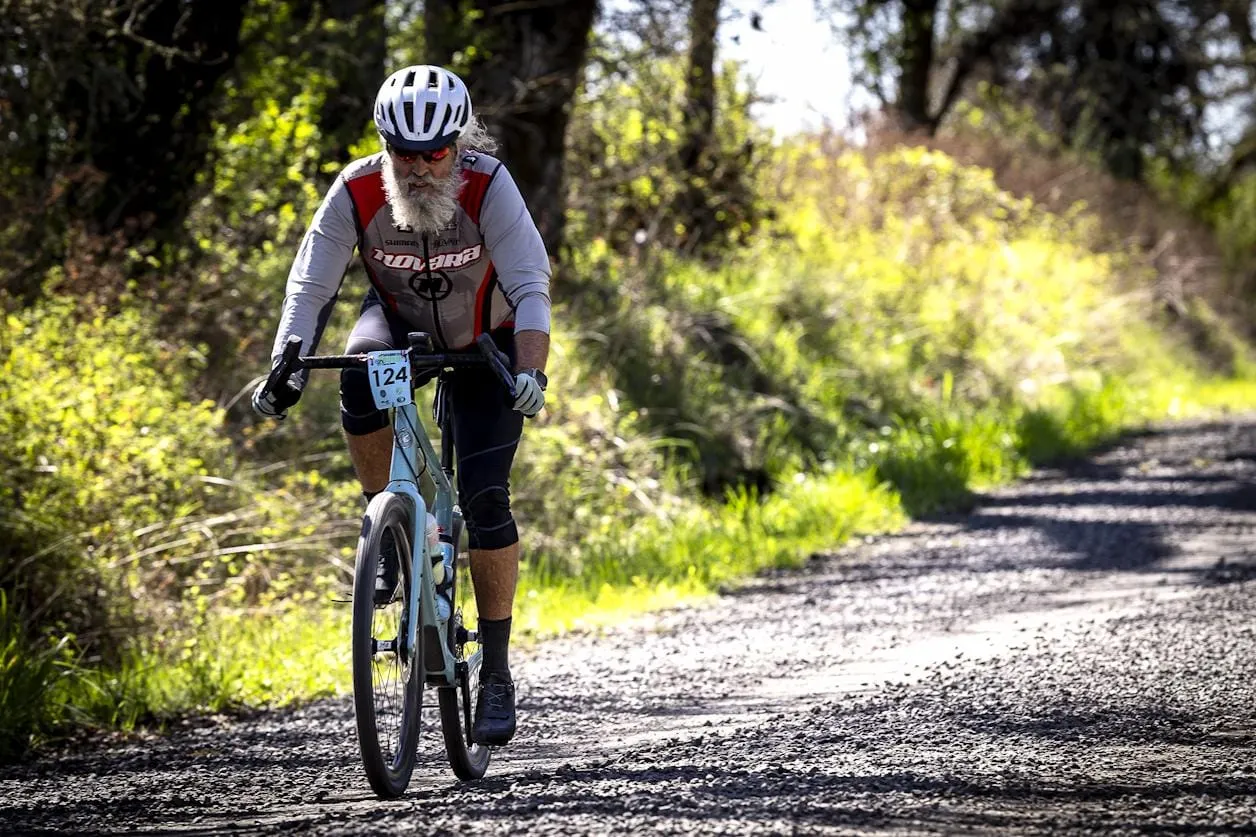
David Dietz began taking cycling seriously when he was fifteen.
He rode for several days down the Oregon coast, entered his first criterium and joined overnight trips organized through a neighborhood bicycle shop. The experience set the direction for much of his life.
The hook, as he describes it, was set.
Decades later, Dietz is still riding. The roads are rougher now, his body requires more attention, and Parkinson’s disease has changed how he prepares for every mile. But Parkinson’s has not erased the cyclist he has always been.
That distinction is at the heart of his conversation with Kira Corbett for Dirty Freehub’s DF Connection podcast.
“I’m still the same guy. I just shake a lot.”
It is a plainspoken line, but it says almost everything.
Dietz is not trying to defeat age or perform a miracle. He is learning how to remain himself while his body changes.
The ride begins before the bicycle moves
When Dietz was younger, preparing for a ride was simple: water, food, sunscreen and a bicycle.
Now, preparation requires more concentration.
He moves more slowly and tries to avoid distractions while gathering his equipment. Water remains important, but medication has become essential. He carries the doses he expects to need—and additional medication in case the ride takes longer than planned.
That extra dose represents something larger than a pill.
It represents planning for uncertainty.
A mechanical problem, wrong turn or delayed riding companion can add an hour to a trip. For someone whose Parkinson’s symptoms become more noticeable as medication wears off, that hour matters.
Dietz learned this through experience. Missing a dose can increase shaking and stiffness and make movement more difficult. The cyclist who once simply jumped on his bicycle must now account for medication timing before rolling away.
This is cycling over sixty in its most honest form.
It is not simply continuing to do what you did at thirty. It is understanding what has changed and building a new system around it.
What other riders may never see
Parkinson’s is not always obvious to the person riding behind you.
Dietz says the left side of his body is more affected. While holding the handlebars, his left arm can tire more quickly. Tension develops through the arm and shoulder until he needs to release the handlebar, shake out his hand and then take hold again.
On one ride, another cyclist noticed the repeated movement and asked what he was doing.
Dietz explained.
At other times, nobody notices. That is fine with him. He admits to feeling self-conscious about his symptoms. When they are not visible, he can simply be another person riding a bicycle.
But the experience reveals something every cycling group should understand:
The rider who appears fine may be working much harder than anyone realizes.
A cyclist may be managing tremor, stiffness, medication changes, impaired balance, vision limitations, diabetes, pain or fear of falling. The group sees a jersey and helmet. It may not see the private calculations happening beneath them.
A humane peloton leaves room for what it cannot see.
The small adaptations that keep the ride going
Dietz has not stopped riding. He has changed the way he rides.
His field of vision does not feel as broad as it once did. He concentrates more deliberately on the terrain immediately ahead. Actions that were once automatic—such as taking one hand from the bars to retrieve a water bottle—now require additional attention.
His solution is a hydration pack.
Instead of reaching down toward the bicycle frame on rough gravel, he can bring a drinking tube to his mouth while maintaining better control of the handlebars.
He also uses a small rearview mirror attached near his glasses. Turning his head to check traffic can interfere with his balance, particularly when preparing to cross a road or make a left turn. The mirror allows him to see what is approaching from behind without making a large movement.
These are not dramatic pieces of technology.
A hydration tube. A mirror. Extra medication.
But that is how adaptation often works. Independence is preserved through small, practical decisions rather than heroic gestures.
Dietz’s practical riding adjustments
- Prepare without distractions.
- Carry water in an easy-to-reach hydration system.
- Bring scheduled medication and an extra dose.
- Use a mirror instead of repeatedly turning the head.
- Keep both hands on the bicycle when terrain becomes difficult.
- Replace risky handheld photography with a mounted camera.
- Pay attention to symptoms before they become overwhelming.
These are David Dietz’s personal strategies, not universal medical instructions. A person living with Parkinson’s should discuss exercise, medication timing and cycling safety with their healthcare and rehabilitation team.
Why gravel changes the conversation
Gravel riding requires attention.
The bicycle moves over washboard surfaces, loose stone, changing grades and unexpected obstacles. The rider balances, steers, chooses a line and responds continuously to the terrain.
Dietz says this activity can temporarily draw his attention away from Parkinson’s symptoms. He is navigating, balancing and moving through the landscape. The road gives his brain something immediate to solve.
But there is a limit.
When symptoms become strong, they can compete for that attention. Instead of being absorbed in the ride, he becomes distracted by stiffness, shaking or the feeling that his body is not working properly.
The same gravel that can provide focus can also magnify risk when medication is wearing off or fatigue is building.
That is why the most important skill may not be endurance.
It may be judgment.
Knowing when to ride. Knowing what to carry. Knowing when to slow down. Knowing when today’s route should be shorter than yesterday’s.
Giving up one bicycle to preserve the ride
Dietz once rode a tandem bicycle with his wife.
After his Parkinson’s diagnosis, he decided to stop riding it. On a tandem, the actions of one rider affect both people. Changes in balance and control could therefore place his wife at risk as well as himself.
It was not an easy symbol to surrender.
But adaptation is not denial. Sometimes preserving an active life means letting go of one version of an activity so that another version remains possible.
The tandem ended.
Cycling did not.
That may be one of the most important lessons in Dietz’s story: the goal is not to protect every old habit. The goal is to protect the part of life that gives the habit meaning.
Adventure. Movement. Friendship. Independence. The sensation of traveling under your own power.
The over-sixty revolution
Our culture often presents aging as a series of disappearances.
Strength disappears. Speed disappears. Familiar routines disappear. Eventually, the person we once were is expected to disappear too.
David Dietz offers a different picture.
The cyclist remains.
He may need additional time to prepare. His medication travels with him. His hydration pack replaces the old water bottle reach. A mirror compensates for changes in balance. He releases one hand periodically to relieve the tension building through his affected side.
None of this makes the ride less legitimate.
It makes the ride more deliberate.
Cycling over sixty is not about pretending the body has not changed. It is about refusing to confuse change with erasure.
The bicycle may be different. The route may be shorter. The pace may be slower. The person may require help, technology or a riding partner who understands why the group sometimes needs to wait.
But the road remains open.
David Dietz intends to keep using it for as long as he can.
That is The Grey Revolution—not youth recovered, but life adapted.
 Gran Fondo Guide