Valhalla Coffee Co - Wholesale Coffee Roasting
Studio A — Valhalla Coffee
Down 30th? Yeah. Yeah, one of our customers, yeah. So you do a fair amount of that, kind of? Yeah, we're, most of our business is wholesale. Oh, really? It's just a portion of the business. We mail order wholesale. Retail just kind of happened accidentally.
Yeah, and you started first with just a place to roast. Yeah. They expanded into the shop notion, so— Yeah, my first few years was just a wholesale roaster. A few blocks down, 12th Street. I just had about 400 square feet. About as big as this room here.
They needed to expand, started roasting up front, added a little retail. About the time COVID hit, well, a little before COVID, about 2018, 2019, we acquired this building as well, built it out, extensive, right down to the concrete, it was a moldy garage. Now it's a USDA-approved food processing facility.
I was quite surprised. The story behind the building, you started to tell me a little bit about that. To my understanding, up front was called Warder's Garage, and they built race cars, Corvettes and Volkswagens, and they raced. Warder? Warder, Warder's. To my understanding. I have a few little black and white pictures somewhere, people give me, but the whole front of the coffee shop there was a big garage door, no walls or anything, just concrete walls, and they worked on, built cars in there.
My workshop next door here, that's an actual walk-down grease pit. It goes about eight feet down. Wow. Amazing. Just over my head, anyways. It's pretty deep. I don't think it's allowed anymore, so it's grandfathered in. We don't use it as such, it's just storage. Yeah, now they're not legal anymore.
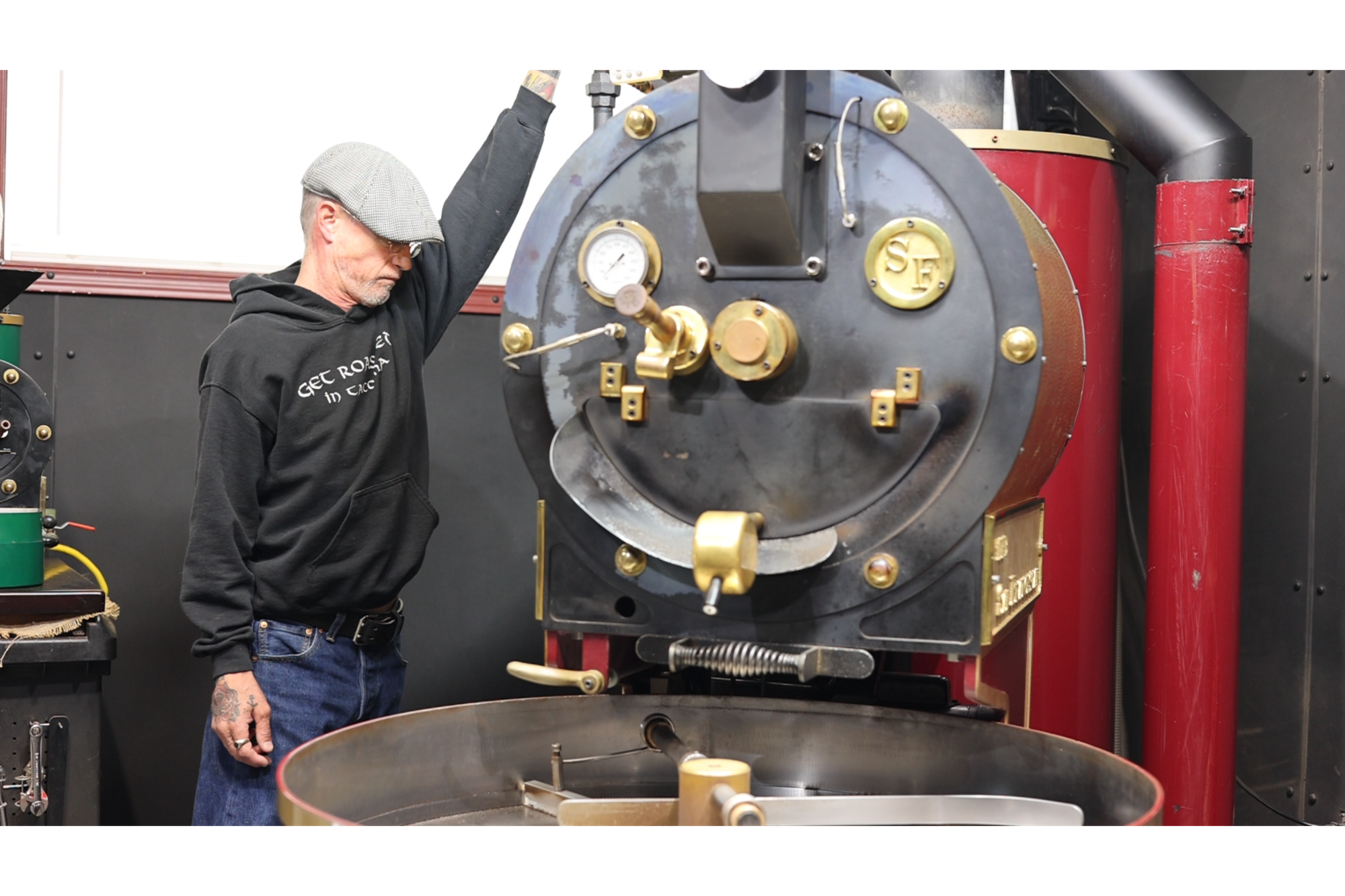
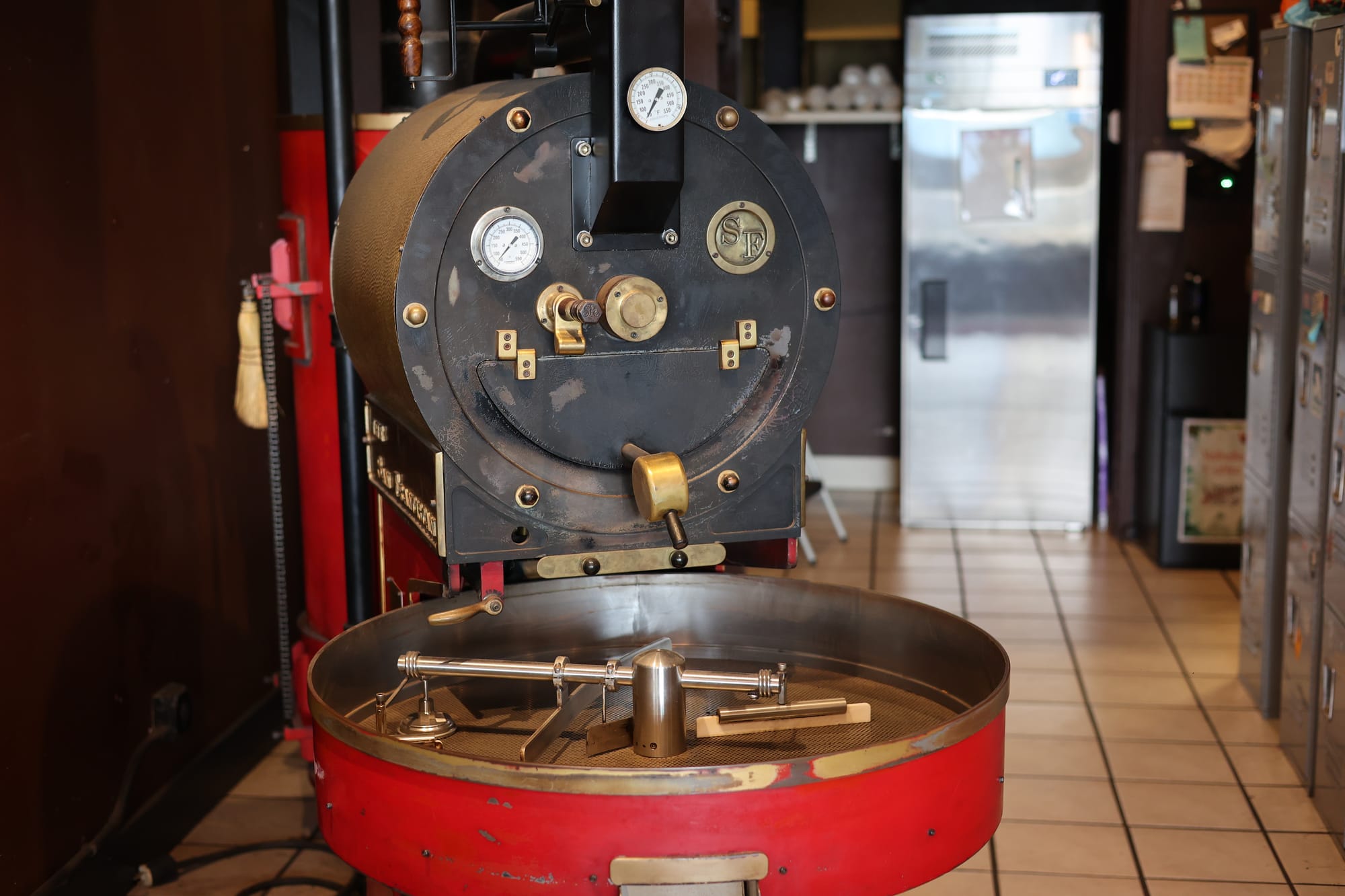
Every Wednesday, we break it all down to bare bones, scrub all the pipes for fire prevention and so forth. These machines are great big fire hazards if you don't know what you're doing. So it's out here, against the drum. Pop it close to the top. Once we're up to temperature, it takes about an hour and a half to warm it up.
There are two physical changes the coffee makes, first and second crack, or different layers of the coffee bean. Moisture is lost, CO2 fills those spaces and cells of the coffee. Cellulose will become the bean, and it expands. Similar ideas to popcorn, not as dramatic as popcorn, but there are several layers to a coffee bean. First crack is a pretty light roast. Second crack is closer to a dark roast. Industry jokes, third crack is fire. There's no third crack, but too much past that, and you go.
I have two, I have set blends and set single origins. And I work with importers, farms, that I know to be consistent quality. Coffee is an agricultural product. There's a lot of ups and downs from one crop to another, like wine, different vintages of wine can change from one crop to another. Same with coffee.
Born and raised here, been roasting coffee and in the coffee business in this part of the town my whole life. It's all I've ever done. There wasn't a Starbucks in Tacoma until 89 or 90. I worked at most of those stores at one point, including the original Starbucks in Seattle. But most of my competitors were taught by me.
I opened a second location once, small. I call it an experiment. Didn't fail, it just wasn't worth the trouble. It was a business that was making money, but it was chaos and distraction from this operation. We've got enough here.
The whole idea of this was to get away from corporate. Just a hands-on family business. I am here every day without fail. I live about a mile and a half down the street, my wife and I, and I'm never far. This is it.