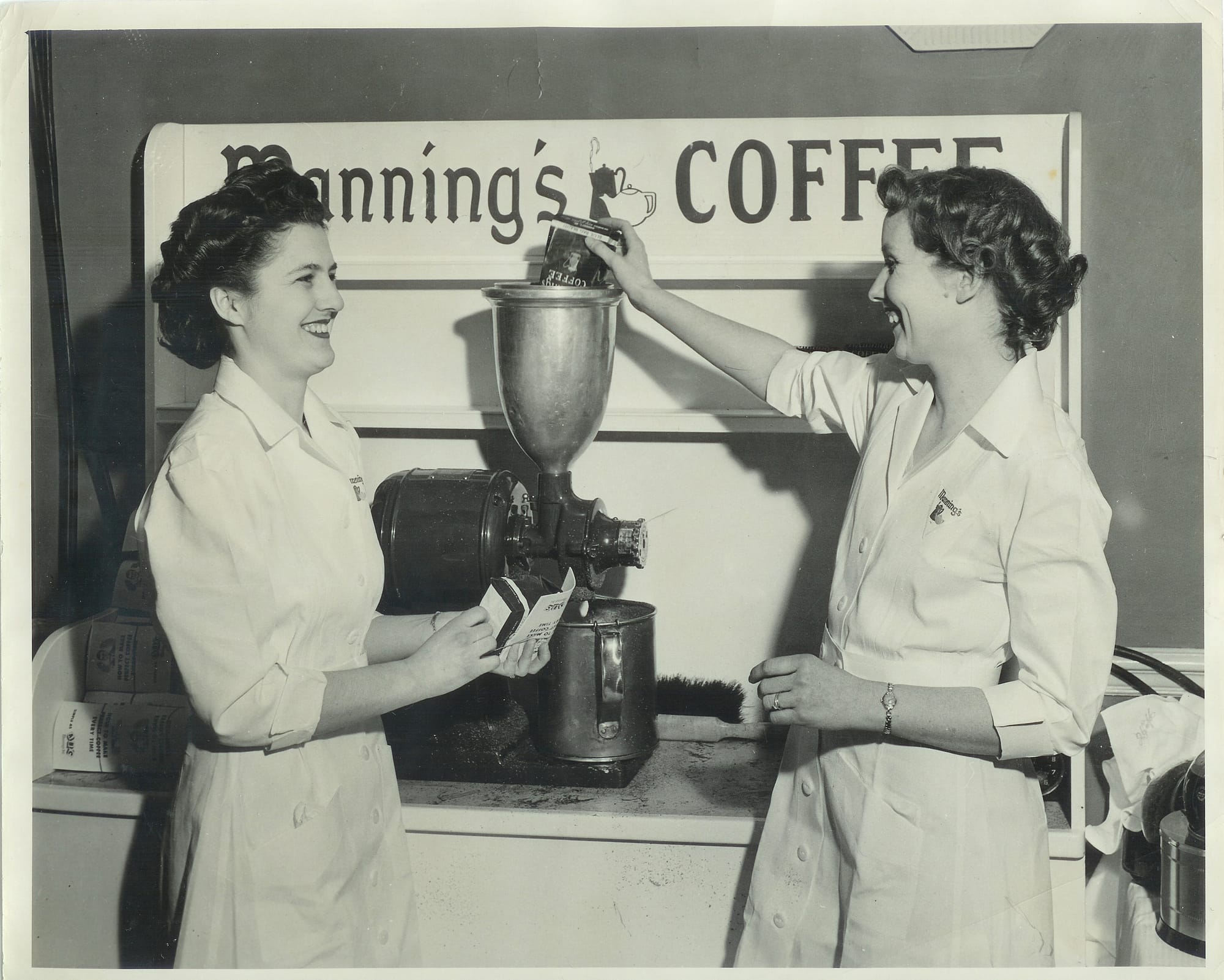
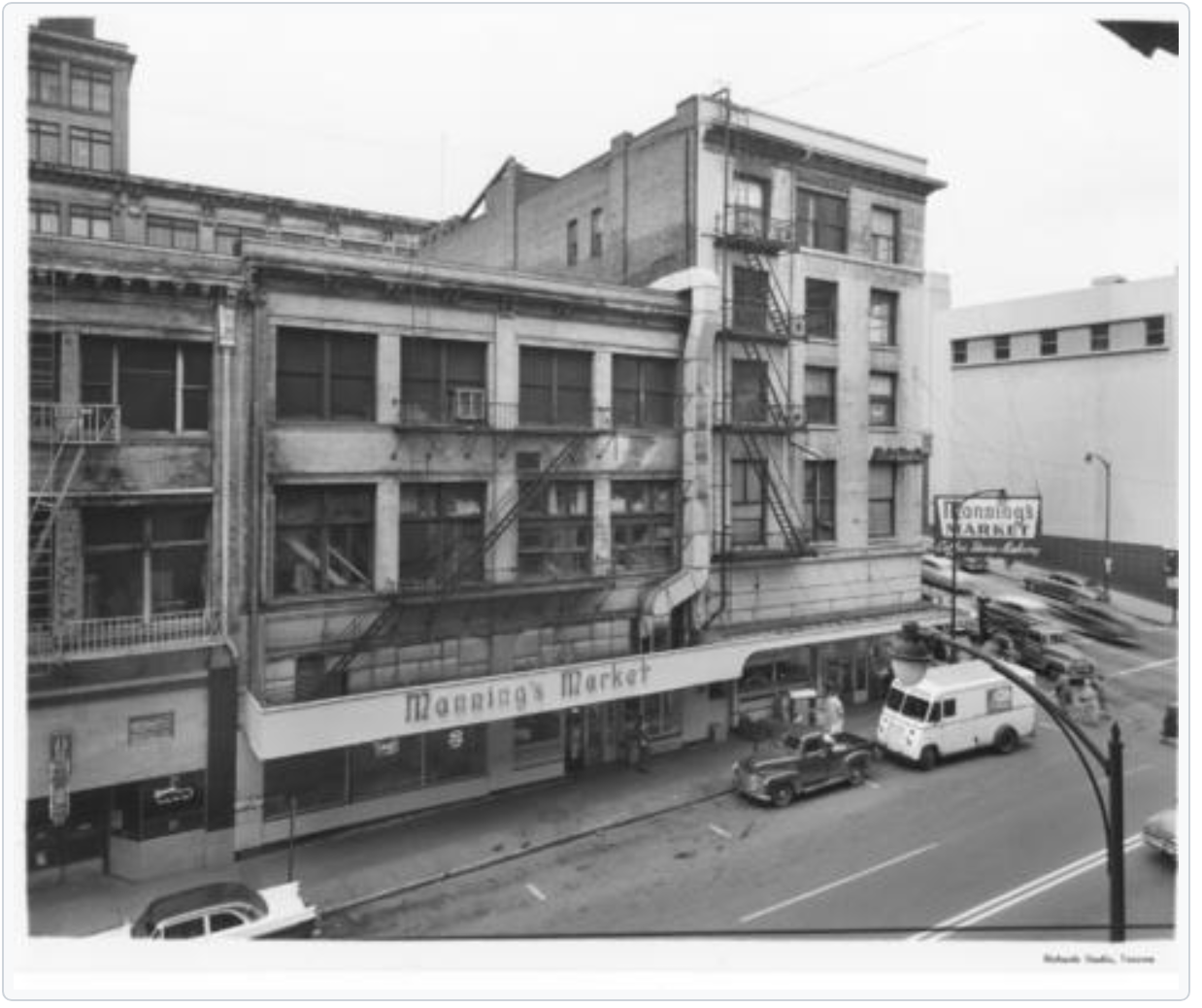
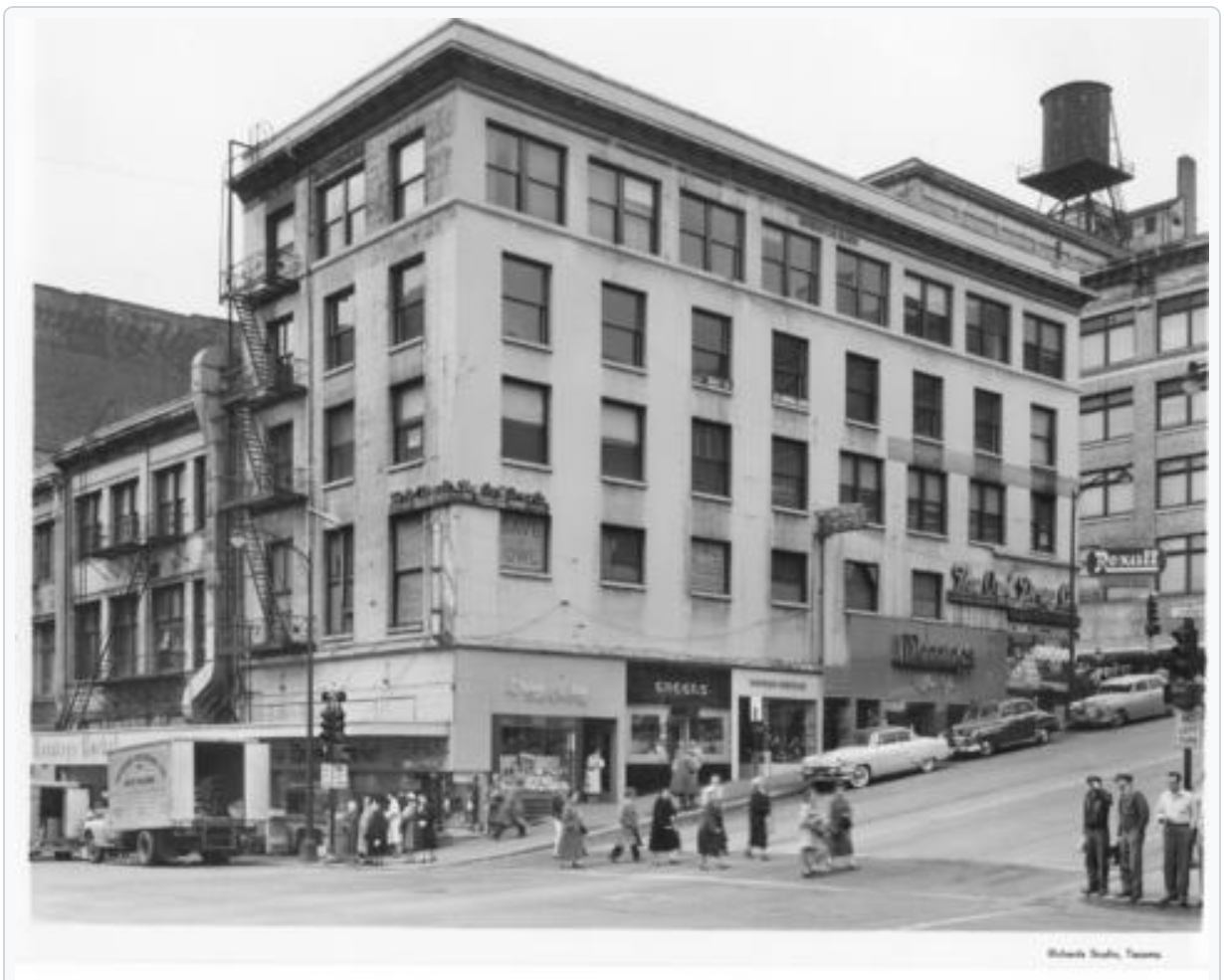
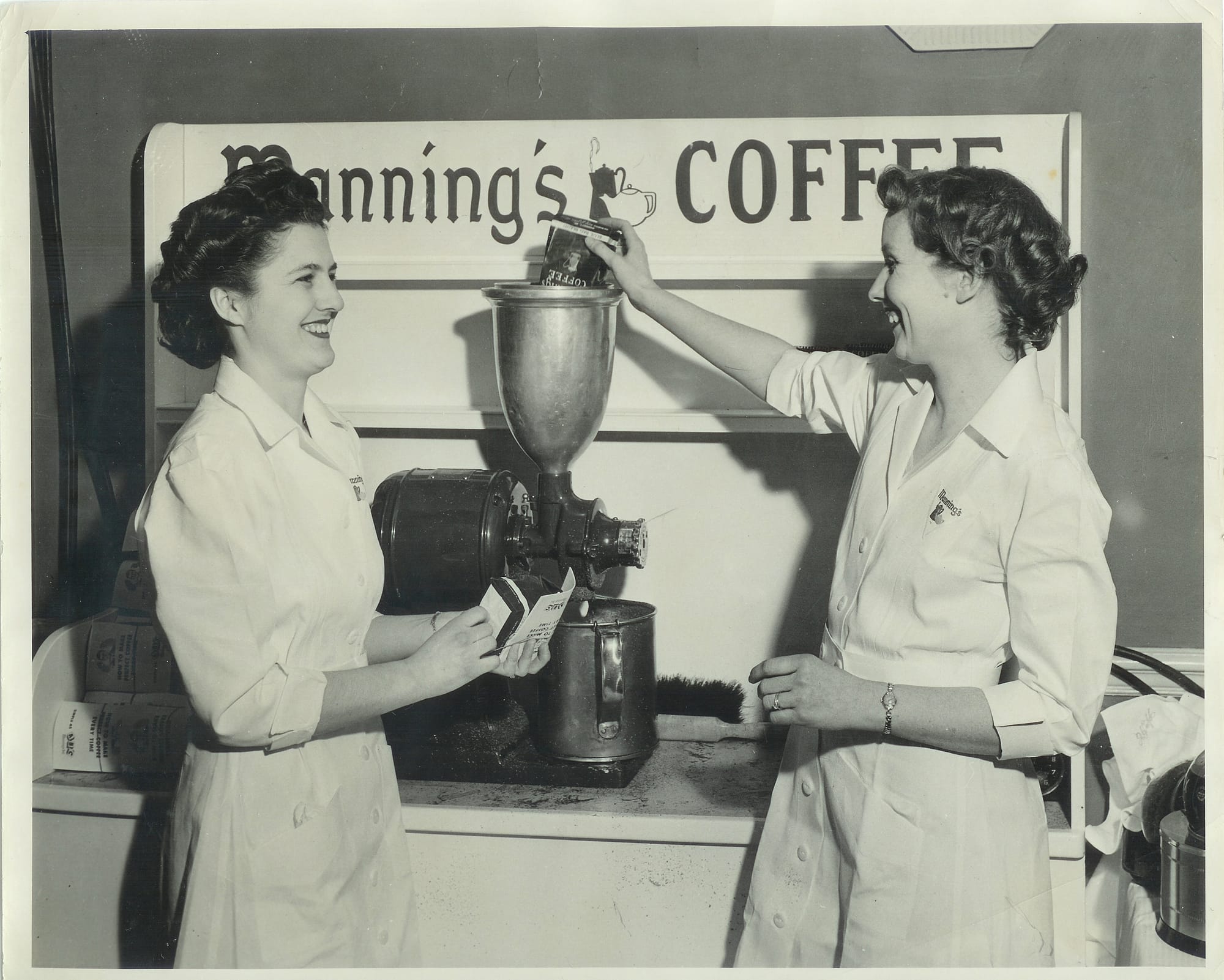
The photograph was taken sometime around 1940. Two young women in white uniforms stand at a coffee grinder, smiling at each other. The Manning's Coffee sign is visible behind them. One of them is Ruth Carlyle Miller. She has been at Manning's for less than a year.
She was working the counter to put herself through the University of Washington.
The Counter Was Not the Destination
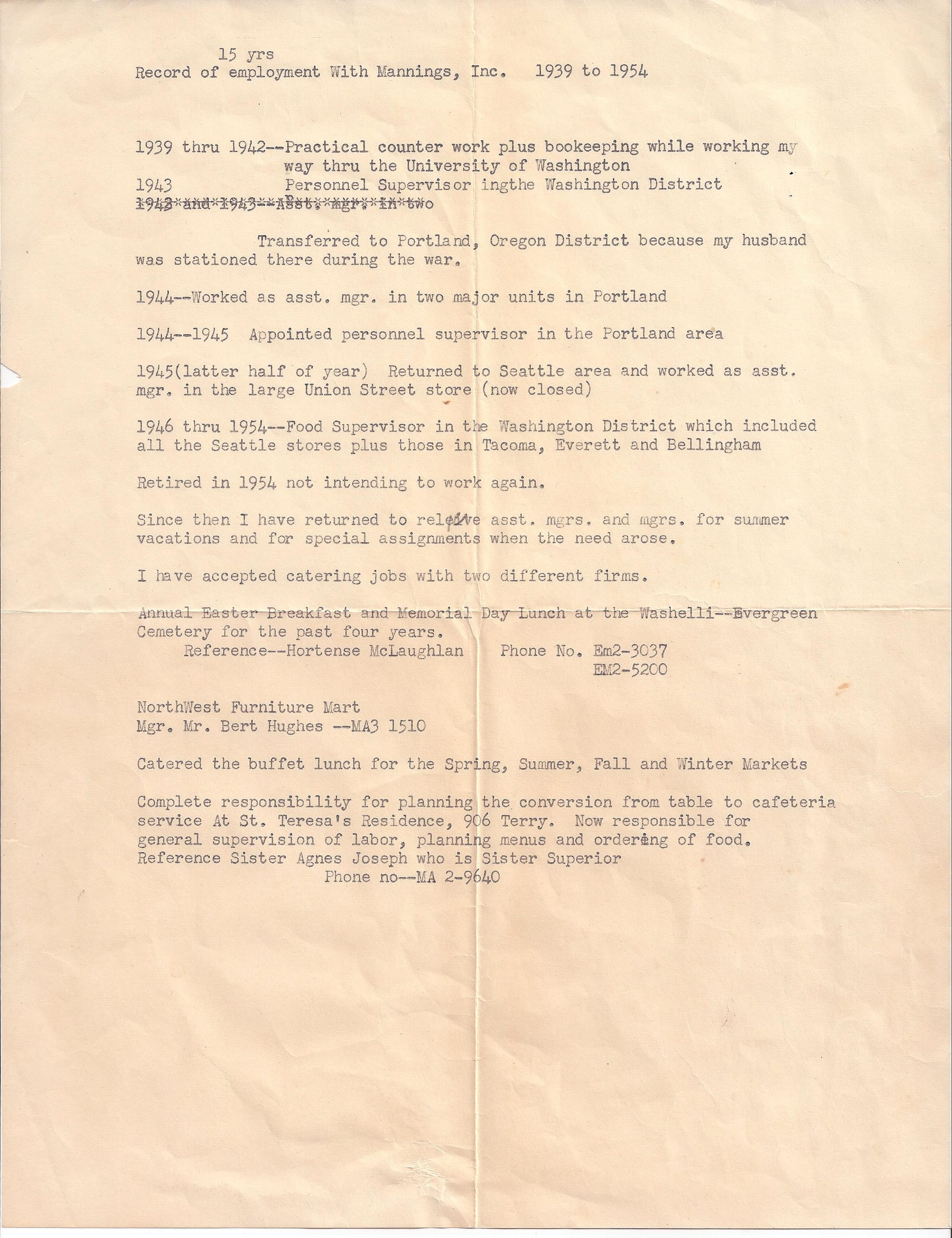
Ruth Miller started at Manning's in 1939 — practical counter work plus bookkeeping, she would later write on her resume, while working her way through the University of Washington. Not after graduation. During. The counter paid for the classroom. The classroom was the exit.
Except Manning's didn't let her exit. Not really. Not for fifteen years.
By 1943 — her fourth year — they made her Personnel Supervisor for the entire Washington District. She was supervising staff across multiple locations while finishing her degree. This was not the arc of a woman who was tolerated. This was the arc of a woman who was essential.
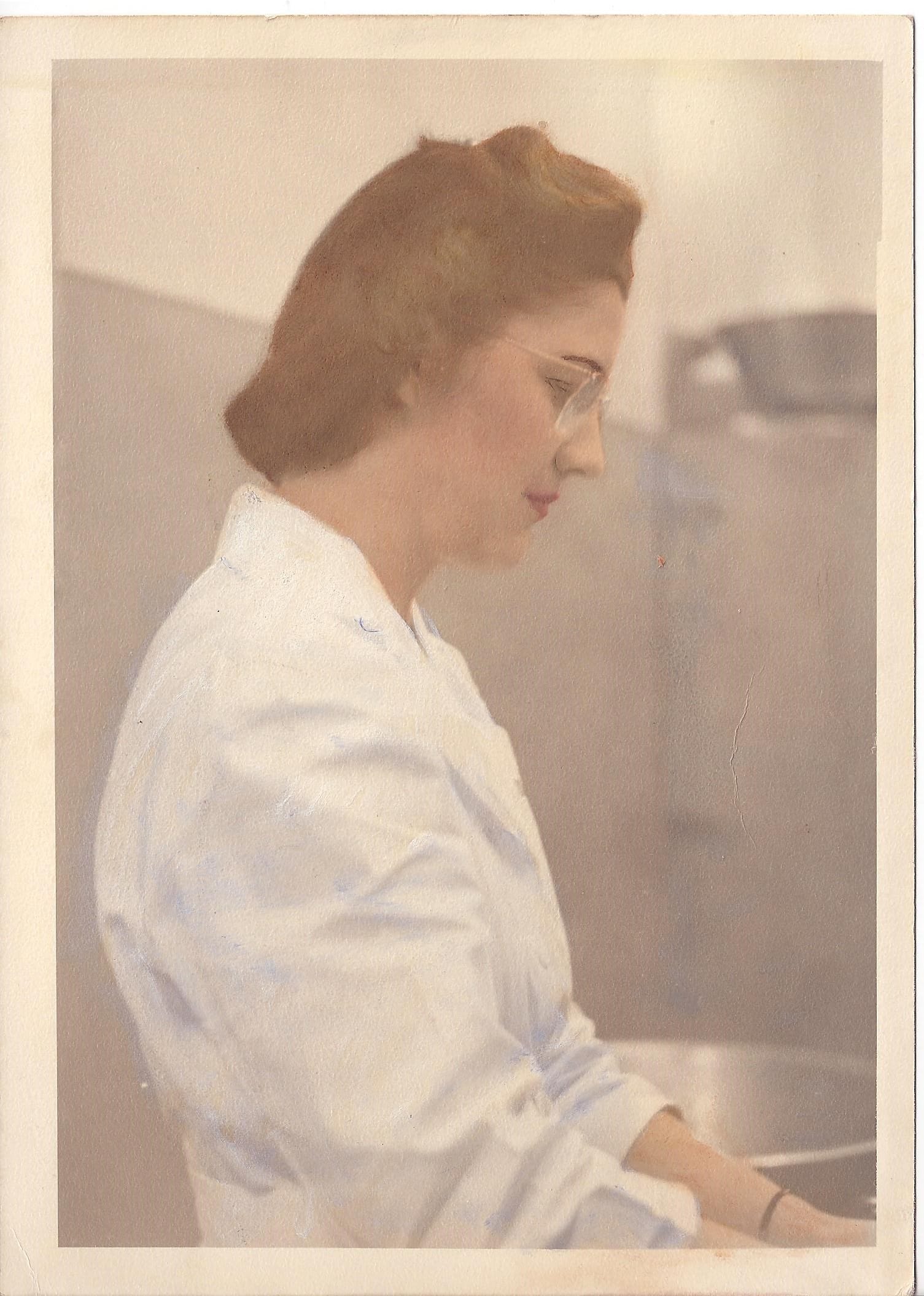
The War Moved Her. Manning's Followed.
When her husband was stationed in Portland during the war, Ruth transferred with him. Manning's transferred her position rather than replace her. In 1944 she was assistant manager in two major Portland units. By 1944-1945 she had been appointed personnel supervisor for the Portland area.
This was not a demotion. This was a corporation valuing a woman enough to move her management role across state lines because the alternative — losing her — was worse than the inconvenience of the transfer.
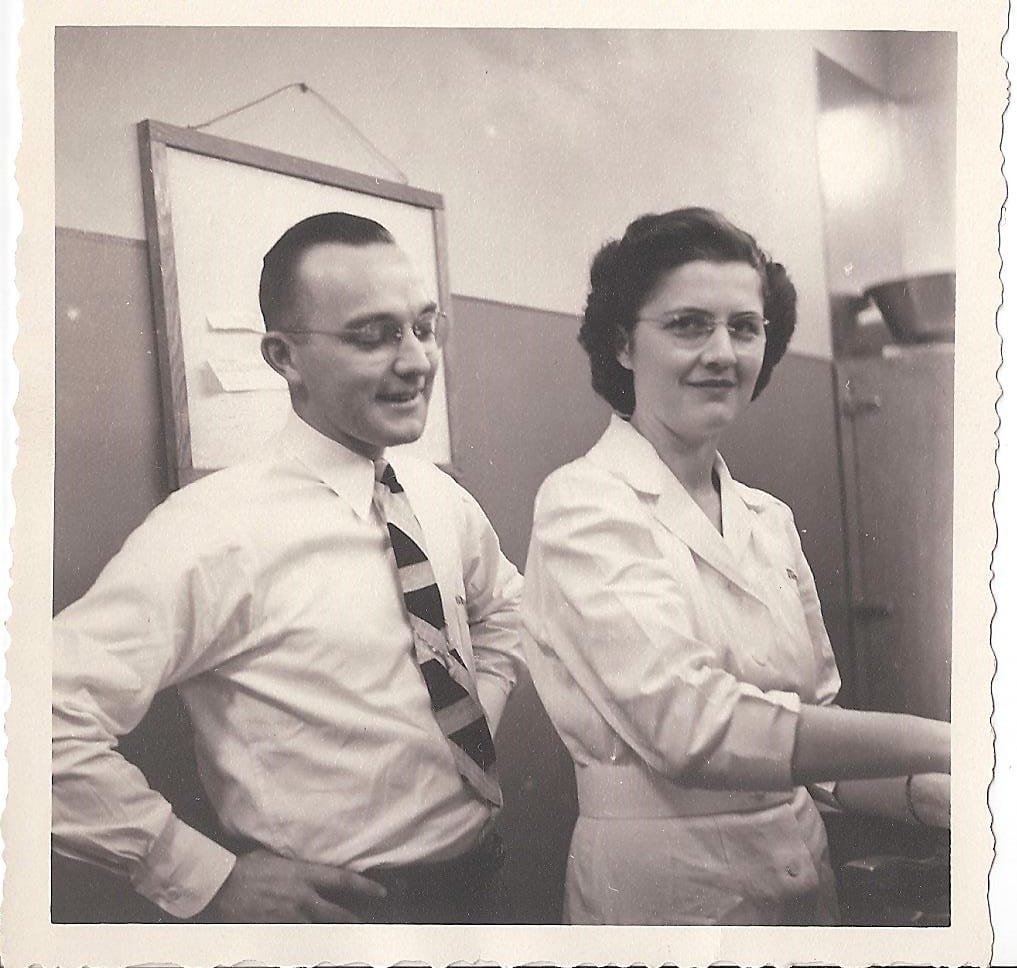
The Washington District
She returned to Seattle in the latter half of 1945 and worked as assistant manager at the large Union Street store. In 1946 Manning's gave her the job that defined the rest of her Manning's career: Food Supervisor for the entire Washington District. All the Seattle stores. Plus Tacoma. Plus Everett. Plus Bellingham.
She held that position for eight years.
She managed the food operation across the entire Pacific Northwest region of a company that, at its peak, operated dozens of locations.She was not a counter girl who got lucky. She was a regional executive who happened to have started at the counter.
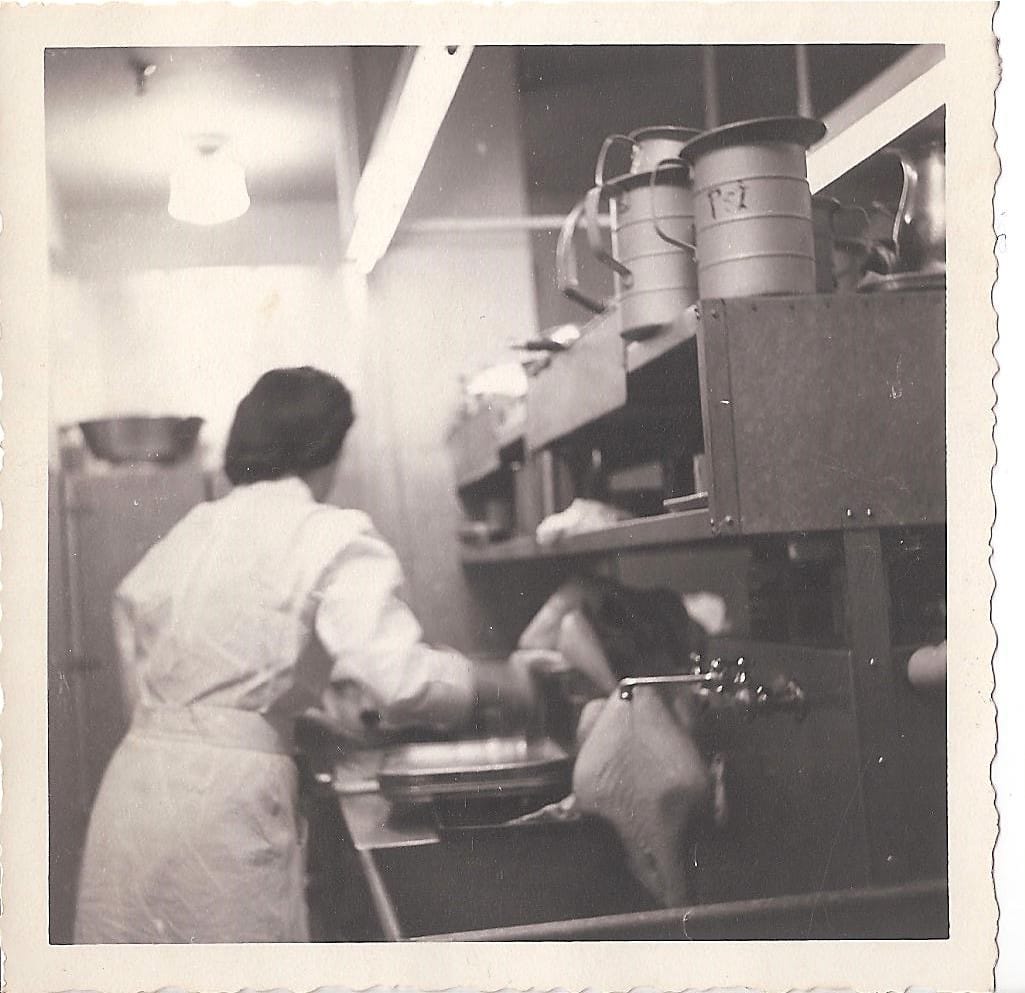
What the Uniform Meant
The white uniforms that Manning's women wore were not incidental. They were deliberate visual branding — a signal of trust, professionalism, and institutional authority at a time when most public-facing women's roles were invisible or domestic. The women in white at Manning's were the face of a corporation that understood something the rest of American business was still learning: that a woman in a position of visible, daily, public authority was not a liability. She was the product.
Ruth Miller understood this. She was, by Stu's account, arms-length with everyone — staff, customers, peers. She did not fraternize. Her cash register was always full. These were not personality quirks. They were professional disciplines. They were how a woman protected her authority in 1943.
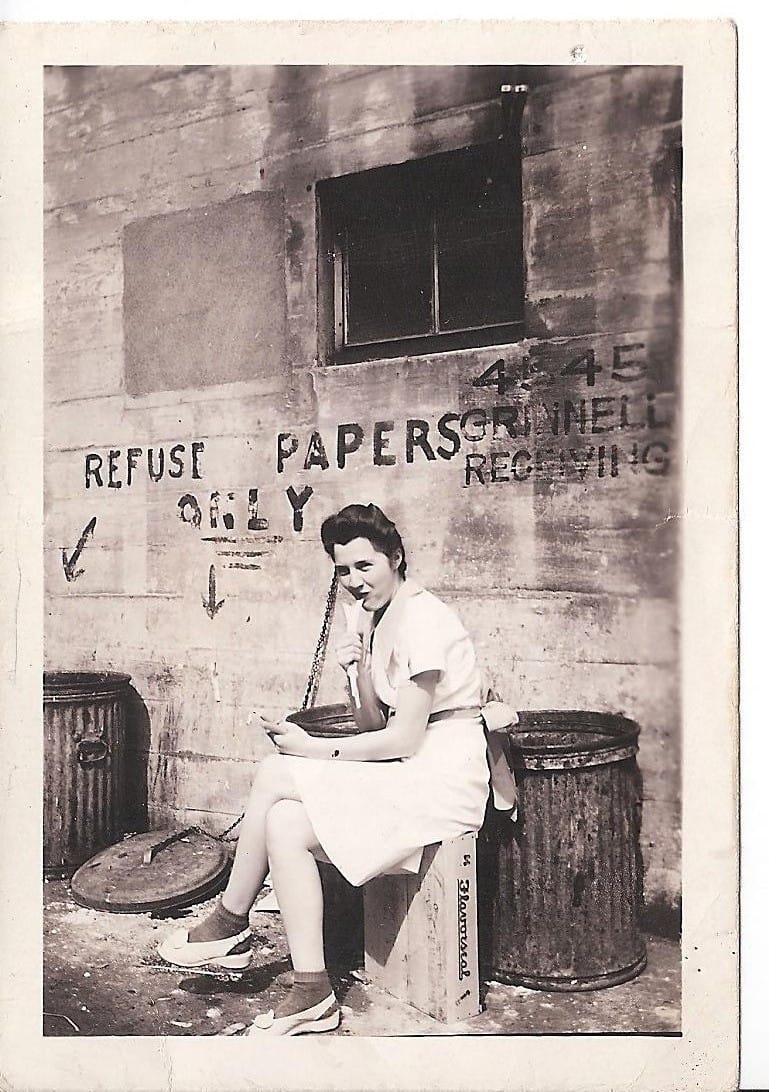
The Resume She Typed Herself
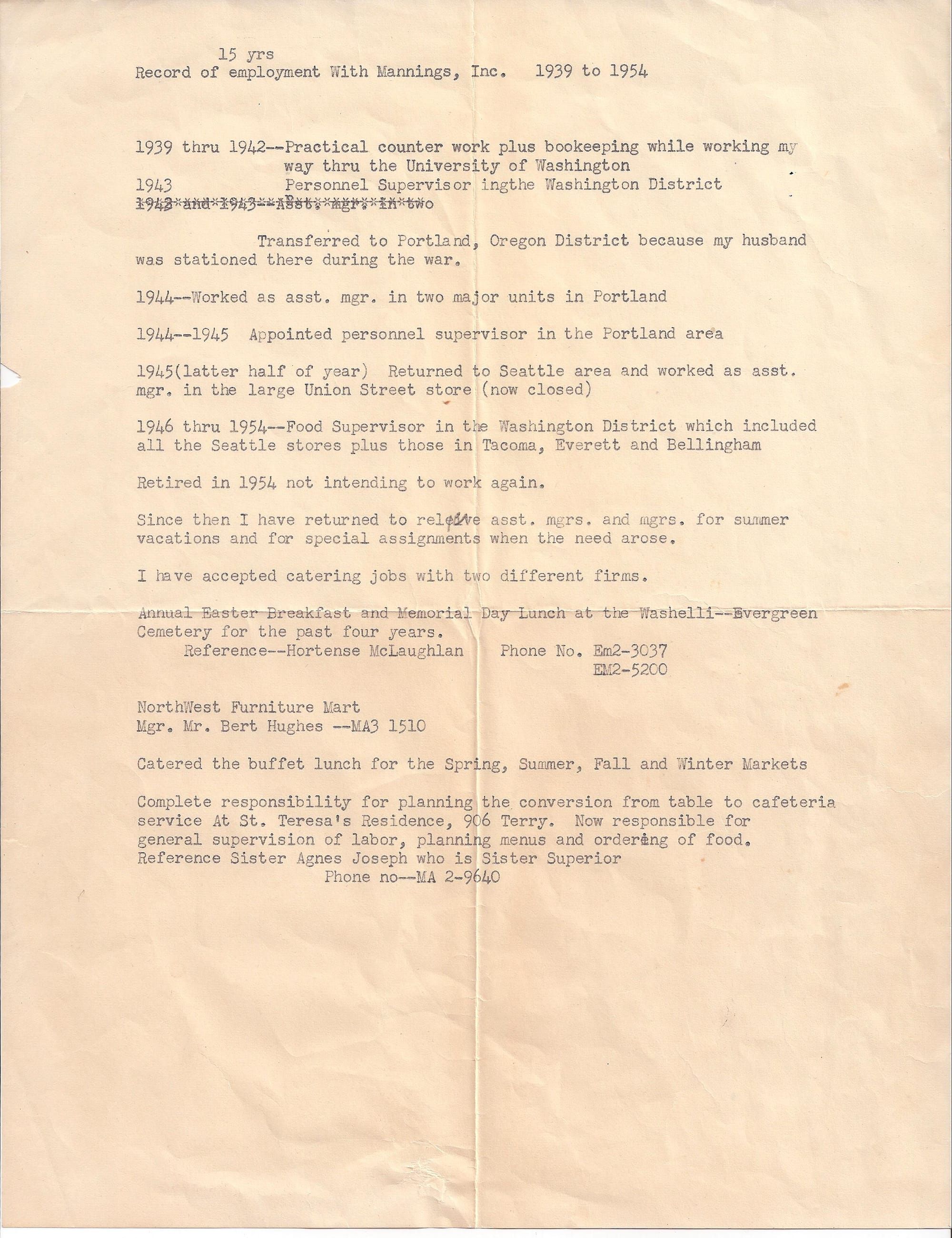
Sometime after 1954 — the year she retired, not intending to work again — Ruth Miller sat down at a typewriter and recorded her Manning's career in her own words. The document exists. It is two pages. It is matter-of-fact, precise, and completely without embellishment.
It is one of the most remarkable professional records in Tacoma's working women's history that almost no one has ever read.
She lists the dates, the titles, the locations, the scope. She notes that after retirement she returned to relieve assistant managers and managers for summer vacations and special assignments when the need arose. She could not quite leave. Manning's kept calling her back.
After Manning's she catered the Easter Breakfast and Memorial Day Lunch at Washelli-Evergreen Cemetery. She planned the conversion from table to cafeteria service at St. Teresa's Residence on Terry Avenue. She took the operational knowledge she had built at Manning's and kept applying it for the rest of her working life.
The Architecture of the Third Place
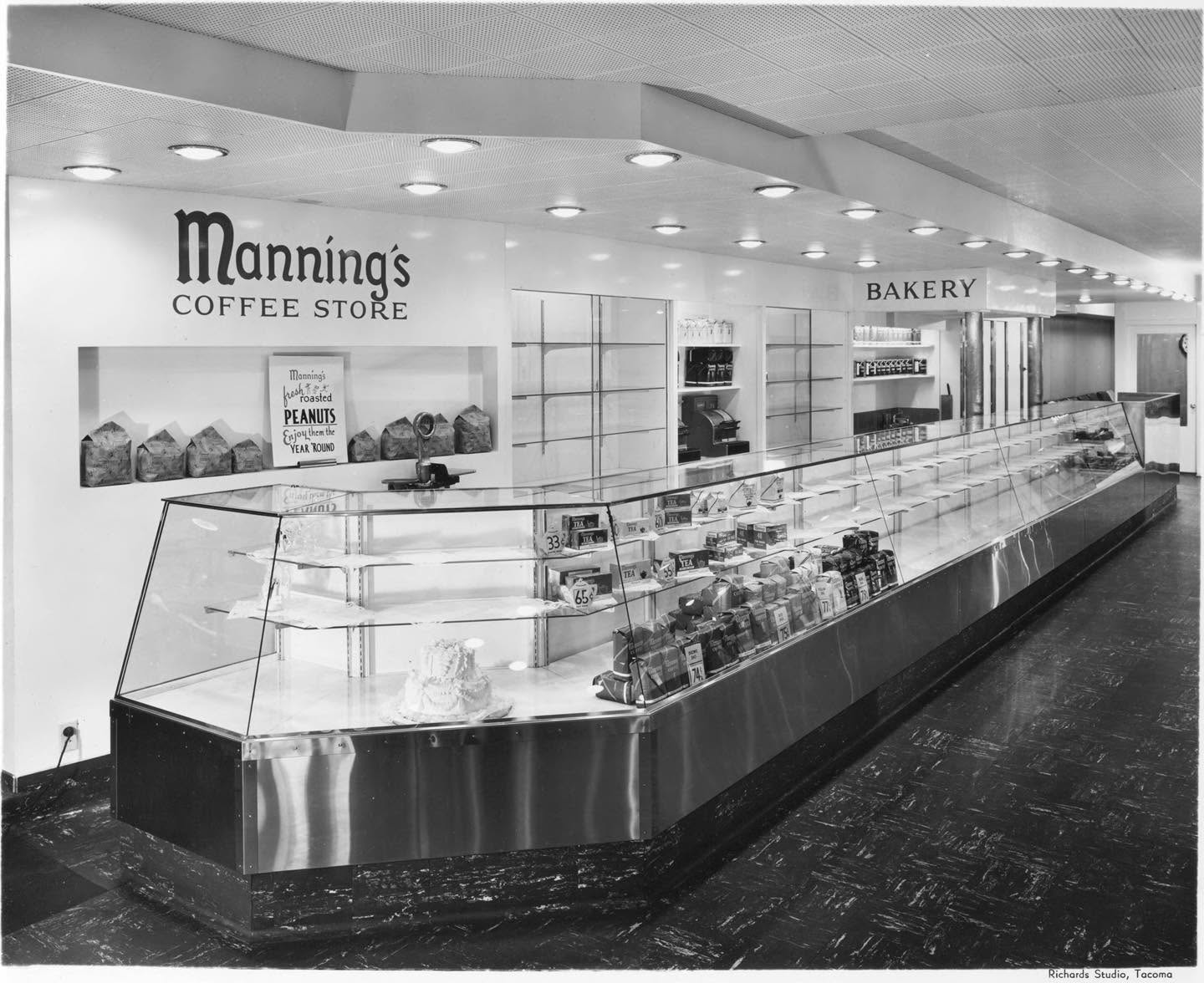
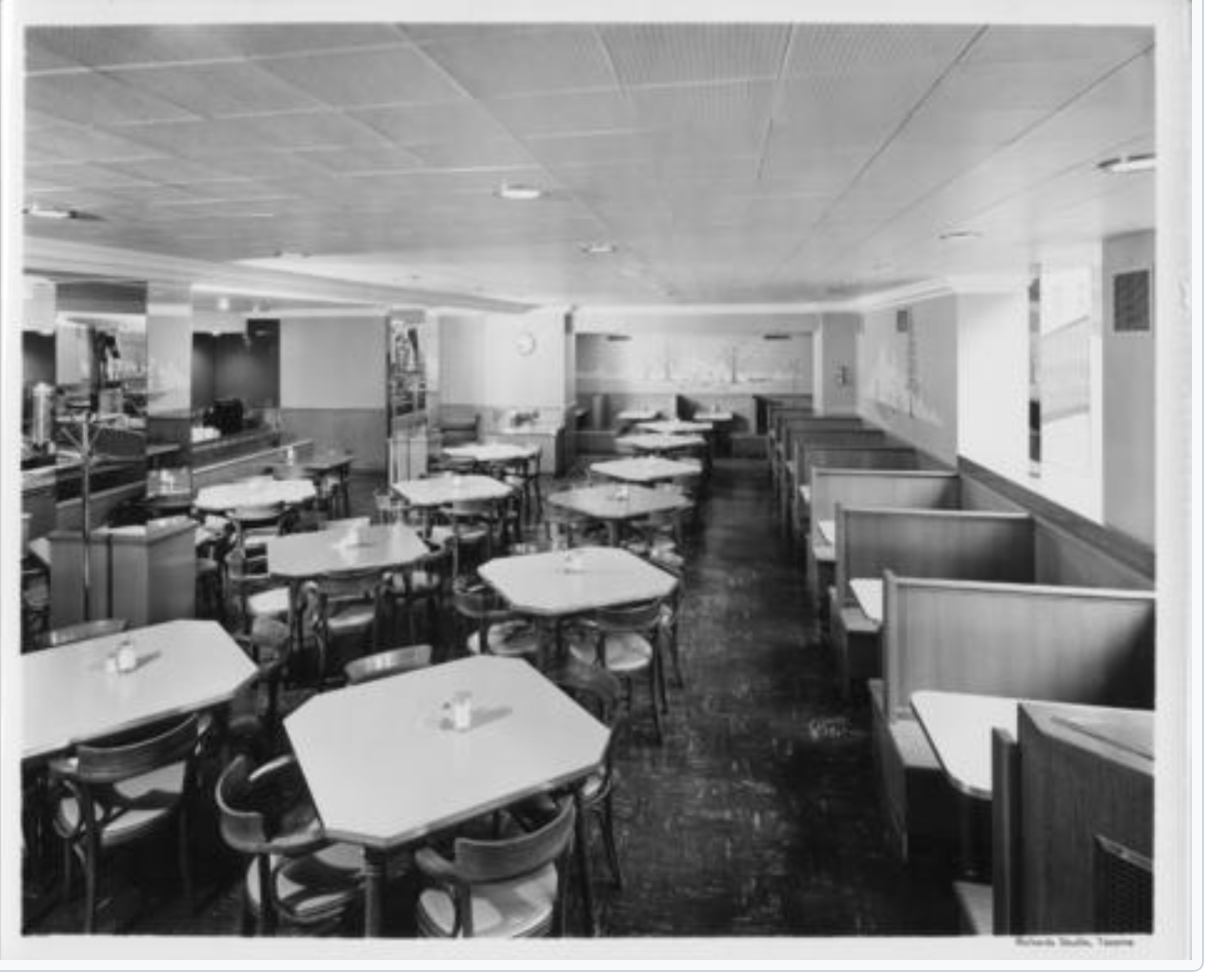
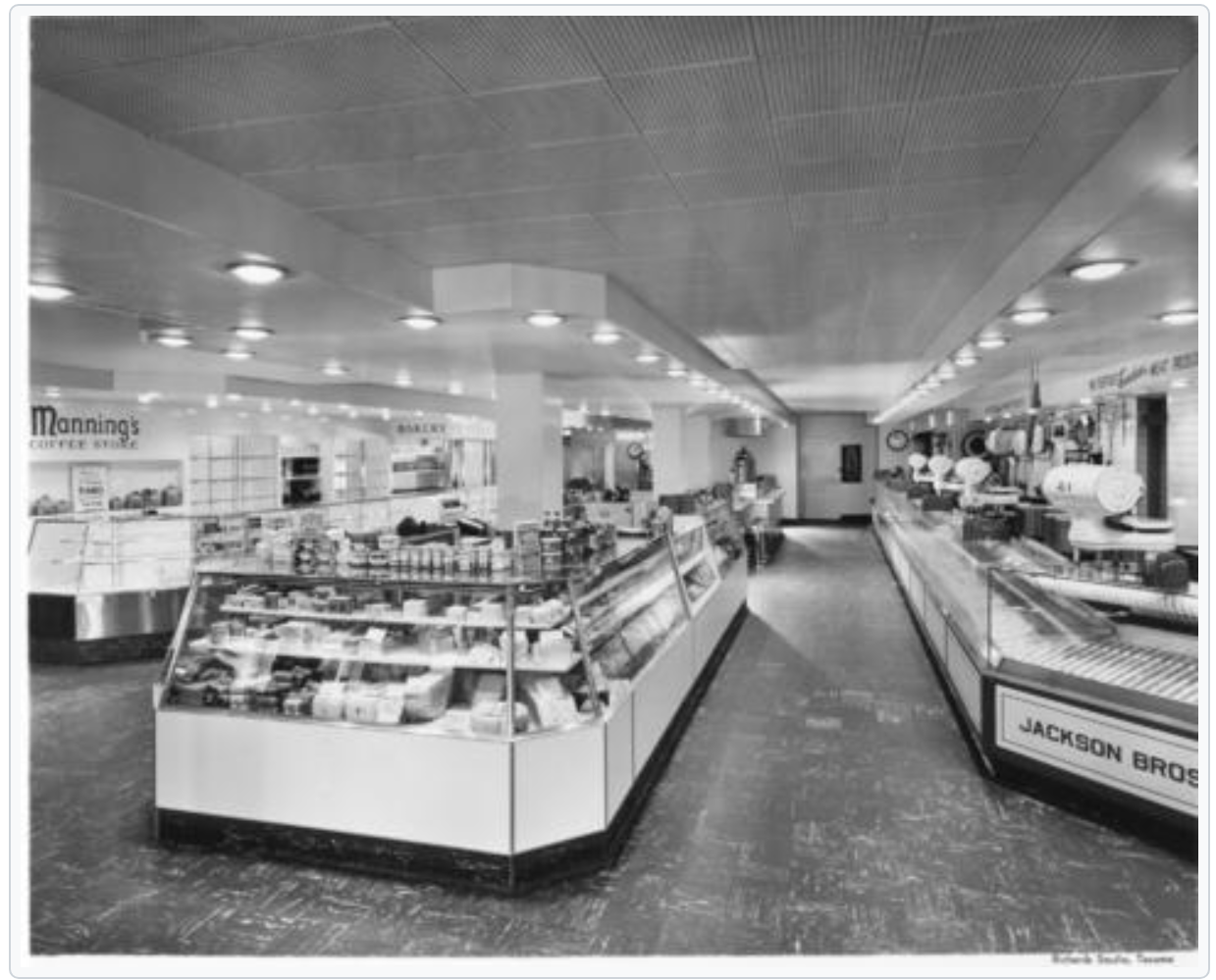
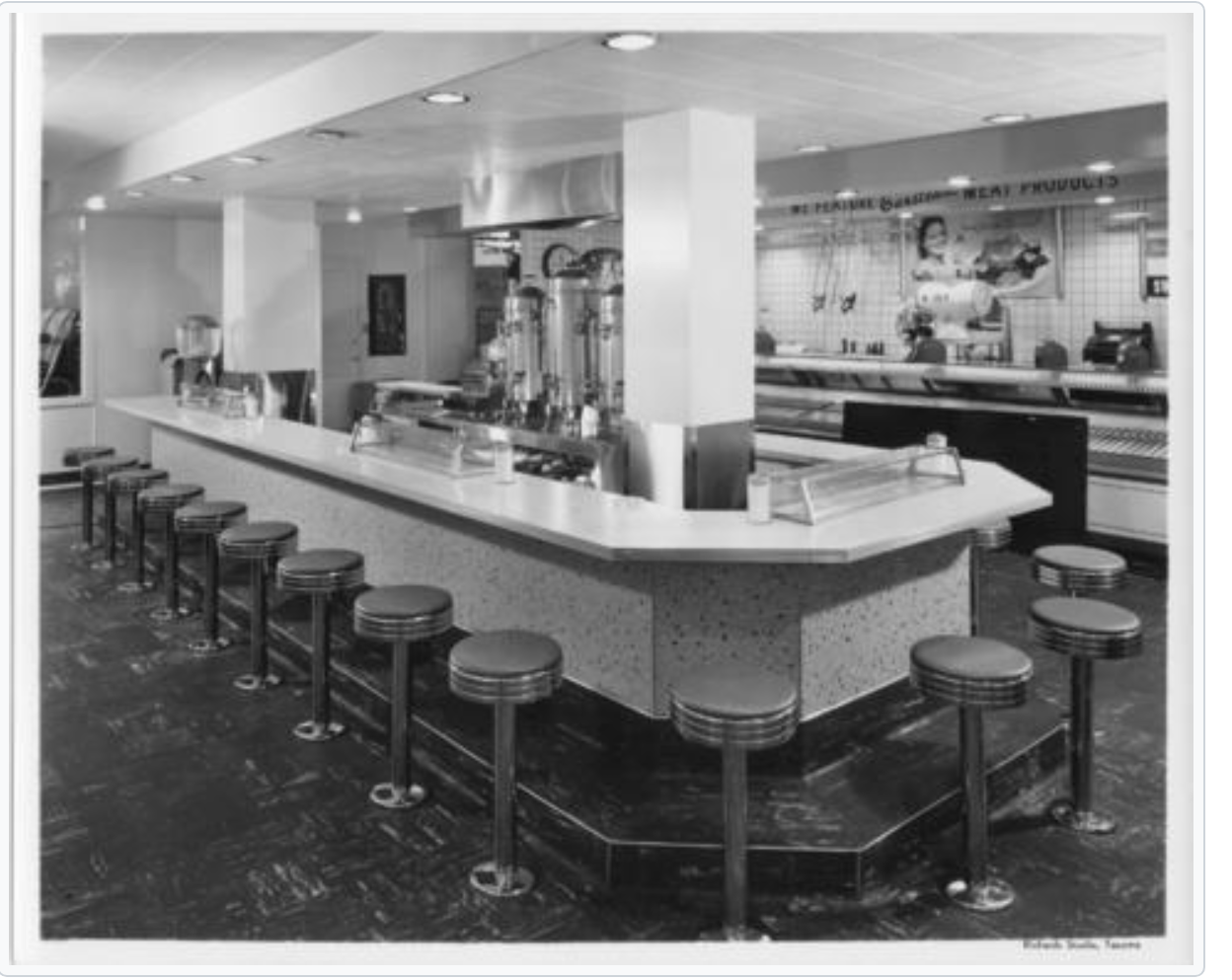
Manning's Coffee was not just a coffee shop. At its peak it was a regional institution — east coast money, corporate structure, locations across the Pacific Northwest, a roasting operation, a retail product line, and a cafeteria model that democratized the public gathering space in ways that were genuinely radical for the era.
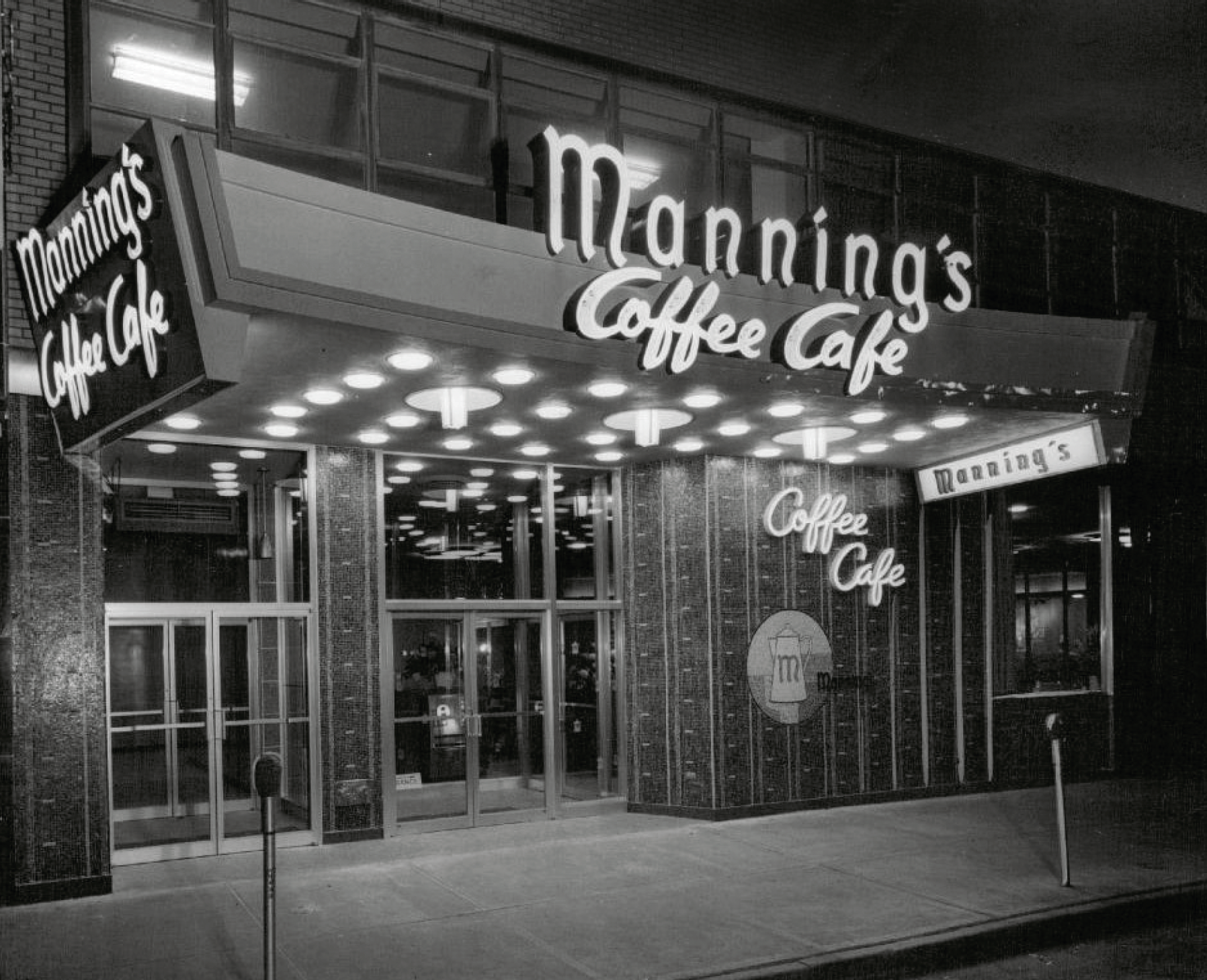
Before Manning's, public gathering spaces were segmented by class, gender, or membership. Saloons were for men. Tea rooms were for the genteel. Private clubs required invitation. Manning's cafeteria model offered something different: a respectable, visible, affordable space where a cross-section of the community — single working women, multi-generational families, students, laborers — could occupy the same room without pressure or cost.
The women in white made that space possible. They were its daily stewards, its consistent human presence, its institutional memory. Ruth Miller supervised those women across an entire region for eight years.
What Happened to Manning's
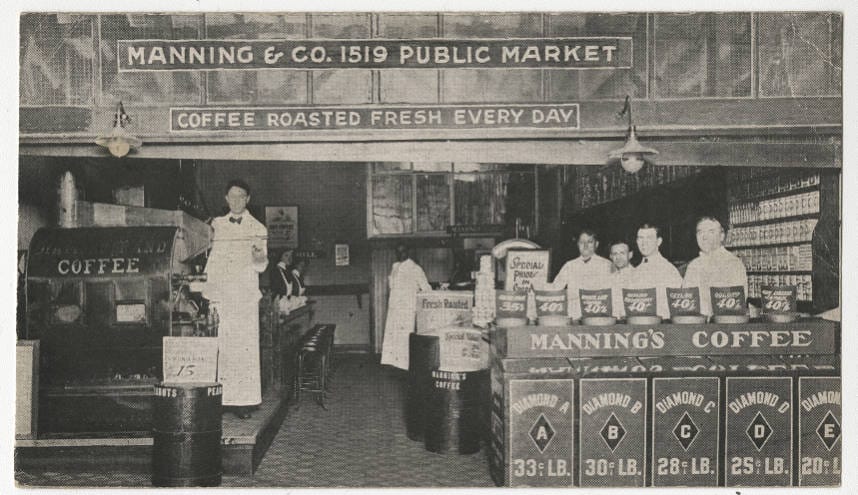
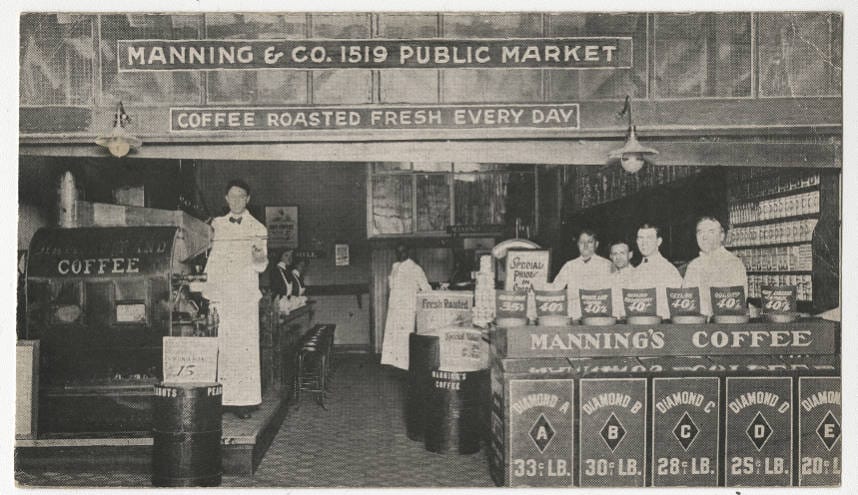
The Manning brothers died. The family that had built the company the enterprise rather than let it continue under other management. Some of the management walked out and started their own cafeterias. The locations closed one by one across the 1960s and 1970s. The Pike Place Market location — 1519 Public Market, where Ruth Miller stood with Russ Lowell in 1944 — is now Lowell's Restaurant, still operating, still serving coffee above the market stalls.
The roasting equipment, the branded dishes, the cups, the tins — most of it dispersed. Some went to landfill. Some went to private collections. Stuart Miller, Ruth's son, spent years hunting Manning's memorabilia on eBay, assembling an archive of objects that proved his mother's world had existed. He donated much of that collection to the Washington State Historical Society Research Center at 315 North Stadium Way in Tacoma.
The collection is accessible by appointment. Ruth Miller's story is in those boxes.
The Series Continues
The Grey Revolution Manning's series is being built from primary sources: Ruth Miller's typed resume, photographs provided by her son Stuart, research by Tracey Pemberton and Mike Elmore, the Washington State Historical Society collection, and the Museum of History and Industry archive in Seattle.
This is not a nostalgia project. It is a documentation project. The women who built Manning's are going undocumented. This series is the record.
If you worked at Manning's, if your family did, if you have photographs, documents, or memories — contact The Grey Revolution.
The Grey Revolution · thegreyrevolution.com · Then & Now thread · Tacoma WA