These are guideposts rather than questions I expect to ask word-for-word:
- What is Corina today?
You see the business from the inside every day. How would you describe what Corina has become — bakery, coffee shop, meeting place, special-order business, or some combination of all of those? - What do customers want now?
What are customers asking for today that they might not have been asking for five or ten years ago? - How important is fresh baking?
A lot of coffee businesses can serve excellent coffee without producing food themselves. How important is having fresh pastries, cakes and savory items to Corina’s identity? - What makes someone become a regular?
What turns a customer from someone who comes in, buys something and leaves into someone who sits down, comes back, and begins to feel like part of the place? - How does the building affect the bakery?
Does being next to The Grand Cinema and inside a building with arts and cultural activity change who walks through Corina’s door or the rhythm of the business? - What do you look for in a barista?
When you hire someone, what matters beyond the ability to make a good drink? Can hospitality and conversation be taught? - How do different generations interact across the counter?
Do younger employees communicate differently with older regulars, and do you ever coach staff on making those interactions feel less transactional? What makes a good conversation starter? - Where does the “magic” happen?
Is there a particular time of day when you look around the room and think, “This is what this place is supposed to be”? - What is changing in coffee shops?
Do you think customers are beginning to want something different from coffee shops — not just good coffee, but food, comfort, conversation and a reason to stay? - What should never be lost?
Businesses have to change to survive. As Corina changes, what is one part of its culture or customer experience that you would never want to lose?
And I’ll probably finish with one very simple question:
What haven’t I asked you that I should have?
My larger interest is in how places like Corina continue to serve as neighborhood gathering places while the business, customers and surrounding community all change.
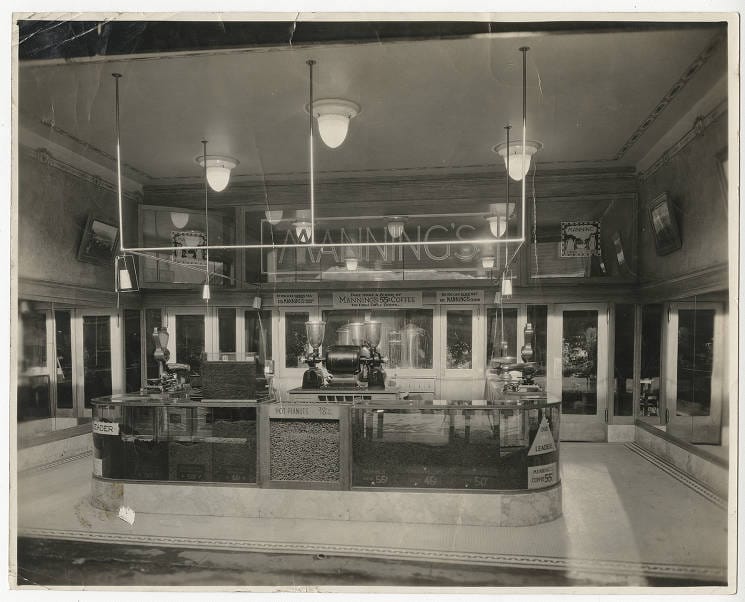
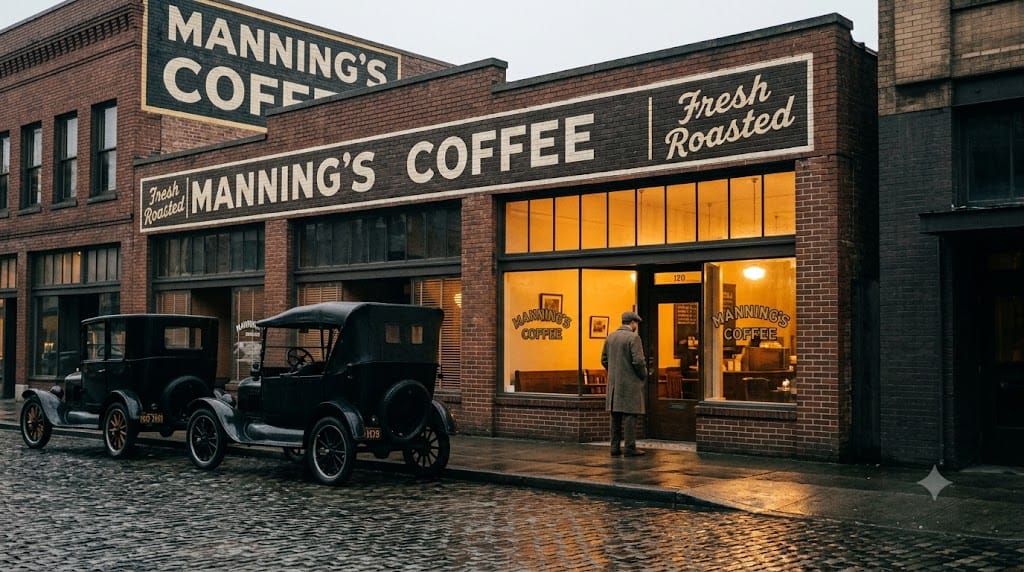
In the Manning’s era, the coffee counter came with rules.
Uniform.
Posture.
Cleanliness.
Courtesy.
A pleasant expression.
The worker behind the counter was expected to represent the company standard.
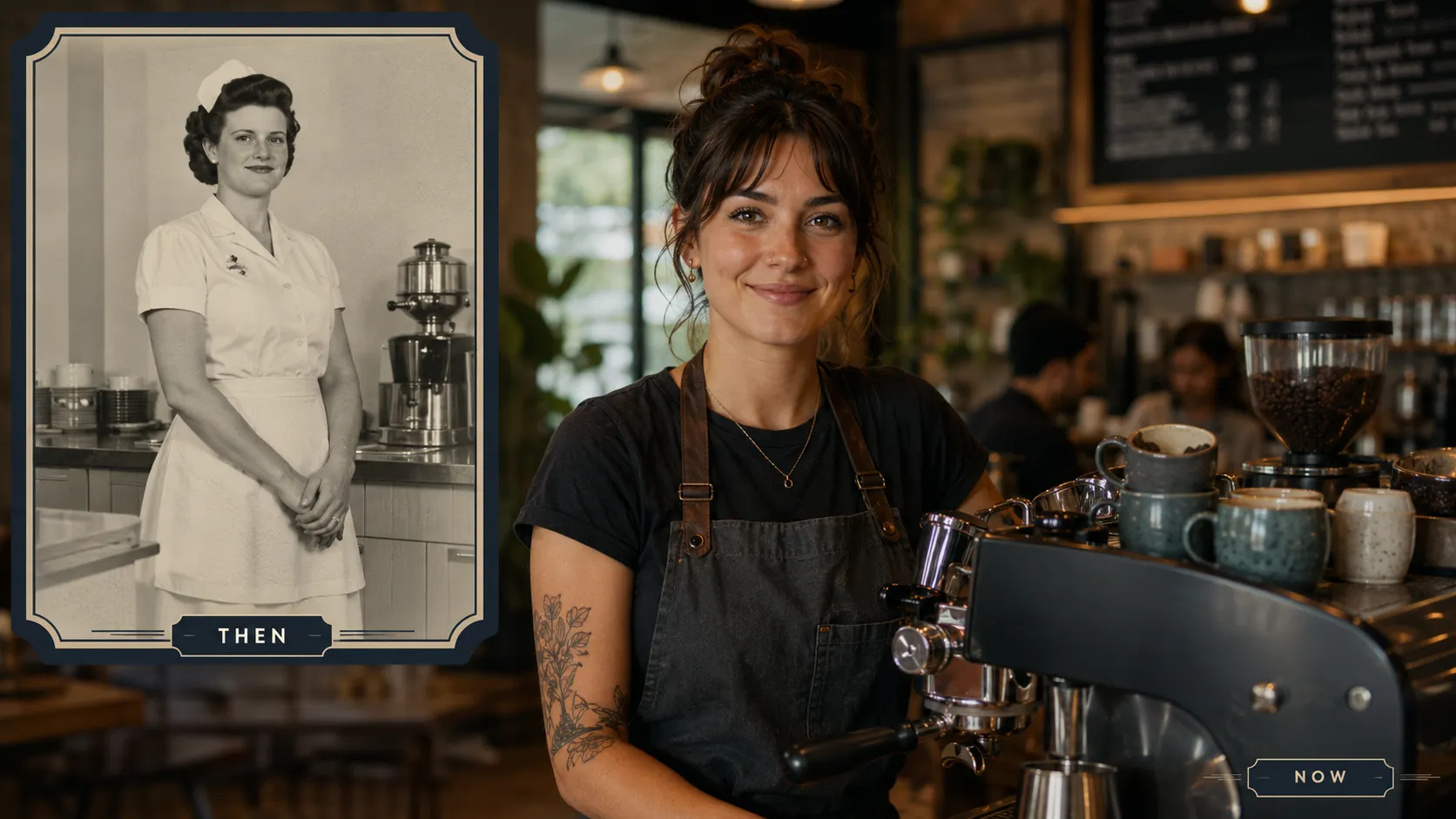
Today, the uniform has changed, but the stage remains.
The modern barista is part craftsperson, part host, part traffic controller, part neighborhood memory. They manage the line, read the room, remember names, calm the rush, protect the mood, and turn a quick cup of coffee into a human exchange.
That is the shift.
The counter did not disappear.
The counter became a neighborhood stage.